IV ketamine therapy as a complement to addiction recovery — disrupting cravings at the neural level so you can finally move forward.
Start with a simple conversation. No pressure — just clarity.You don't have to decide today.
Substance use disorders are not a failure of willpower. They are a disease of the brain's reward circuitry. Years of alcohol, opioid, or stimulant use physically reshape neural pathways, creating deeply entrenched patterns of craving, compulsion, and relapse that resist even the strongest intentions to quit.
Traditional treatments — counseling, twelve-step programs, medication-assisted therapy — address critical dimensions of recovery. But for many people, the underlying neural rigidity remains. The brain stays locked in patterns that whisper just one more, even after months or years of sobriety.
This is where ketamine offers something genuinely different. Rather than simply managing symptoms on the surface, IV ketamine works at the level of synaptic plasticity — the brain's fundamental ability to form new connections and release old ones.
Ketamine is an NMDA receptor antagonist that helps the brain become more flexible and form new connections in regions like the prefrontal cortex, which governs decision-making, impulse control, and emotional regulation. Within hours of an infusion, this shift in plasticity can begin to loosen the rigid patterns that keep people stuck.
For people in addiction recovery, this matters profoundly. The rigid neural loops that drive compulsive substance-seeking begin to soften. New pathways form. The brain regains a measure of flexibility it may not have had in years — creating a window of opportunity where therapy, behavioral changes, and healthy coping strategies can take root more deeply. Many patients describe a window after treatment where the brain feels more open to change.
Emerging research has shown promising results across multiple substance categories:
We want to be direct about something: IV ketamine therapy is not a substitute for rehabilitation, counseling, twelve-step programs, or medication-assisted treatment. It is not a standalone cure for addiction. Anyone who tells you otherwise is not being honest with you.
What ketamine can be is a powerful adjunct — a neurobiological tool that creates the conditions for deeper, more lasting change. Think of it as resetting the soil so that the seeds of recovery can actually take root. The therapy, the community support, the daily work of sobriety — those remain essential. Ketamine simply gives your brain a fighting chance to receive them.
At Music City Ketamine, we work closely with your existing treatment team. We coordinate with therapists, counselors, psychiatrists, and recovery programs to ensure your ketamine therapy fits seamlessly into your broader recovery plan. We are one piece of your puzzle, and we take that responsibility seriously.
Every infusion at Music City Ketamine begins with a thorough medical evaluation. For patients in addiction recovery, we take extra care to understand your history, your current treatment protocols, and your goals. This is not a one-size-fits-all approach.
During your infusion, you will rest comfortably in a private treatment suite under continuous monitoring by our anesthesia professionals. The infusion runs about 40 minutes, but plan on about an hour total from start to finish. Many patients describe the experience as deeply reflective — a quiet, introspective space where rigid thought patterns begin to loosen and new perspectives emerge naturally.
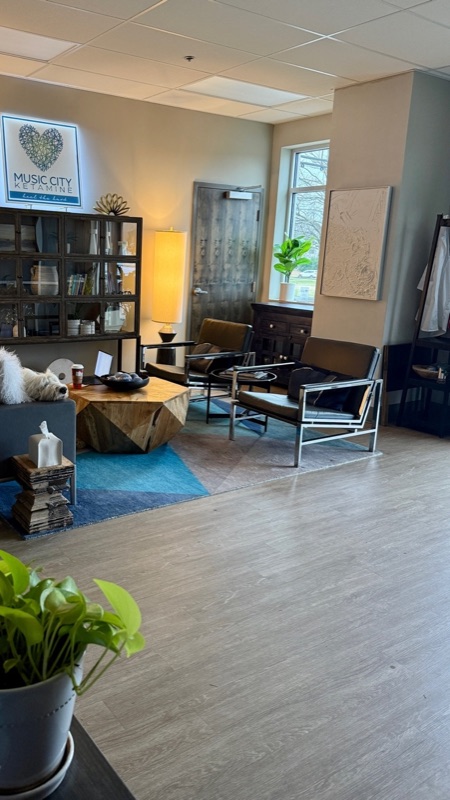
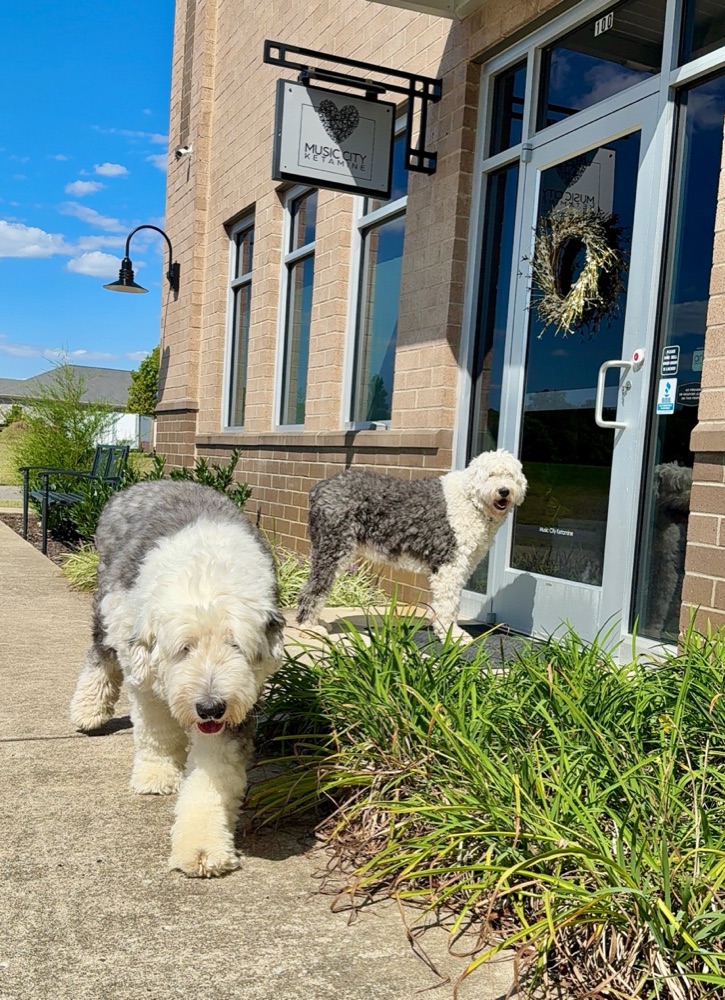
Our therapy dogs, Walter White and Wilma, are often nearby. They're here because people relax faster when something feels safe. There is something grounding about a warm, calm presence when you are doing difficult inner work. Our space was designed to feel like a sanctuary, not a clinic — because healing happens best when you feel safe.
No pressure — just clarity.